
Show Index: gdi
Transparency International highlights key areas for anti-corruption efforts
January 15, 2024 – Following the elections in Taiwan, Ara Marcen Naval, Head of Advocacy at Transparency International Defence & Security, said:
“Following Taiwan’s important election, it’s imperative for the new president and legislature to balance their approach towards external threats with a strong stance against corruption. The country has already taken significant steps to mitigate corruption risk in its defence & security sector, as evidenced by its high score in our Government Defence Integrity Index, but challenges remain in defence contract offsets and the roles of brokers and agents in arms deals.
“These murky areas are especially prone to corruption, which can undermine national security and public trust. We urge the incoming administration to enhance efforts to ensure transparency and integrity, particularly in defence procurement. Strengthening these areas will build on existing progress and ensure that Taiwan’s defence sector not only remains effective and resilient, but also fosters a sense of accountability and credibility within the international community.
“By prioritising transparency and integrity in defence procurement, the incoming administration can fortify Taiwan’s position as a responsible global player. This commitment will not only bolster national security but also contribute to building enduring partnerships, fostering regional stability, and upholding the principles of good governance on the global stage.”
Notes to editors:
The Government Defence Integrity Index (GDI) scores and ranks nearly 90 countries on the quality of institutional controls to manage the risk of corruption in defence and security institutions.
Taiwan achieved an overall rank of B, indicating a low risk of defence & security corruption.
However Taiwan was ranked C, indicating a moderate risk of corruption, on the Index’s ‘procurement’ indicator.
This assesses the level of safeguards against corruption in arms deals and includes the use of defence contract offsets and the roles of brokers and agents.
Transparency International Defence & Security will be publishing new research on the corruption risk posed by offsets later this year.
December 19, 2023 – Transparency International Defence & Security welcomes the action taken in sanctioning two former Afghan officials for ‘widespread involvement in international corruption’. This move is an important step in acknowledging and addressing the impacts that corrupt practices in the defence and security sectors have on both national and international security.
The Special Inspector General for Afghanistan Reconstruction (SIGAR) recently announced that the US Treasury Department had sanctioned two individuals for corruption during 2014 to 2019 that included theft of fuel intended for the prior Afghan government’s security forces.
SIGAR said this theft denied coalition and Afghan forces of a vital resource and only made the Taliban stronger.
This corruption took place at a time when national and international efforts were supposed to be focussed on building the Afghan forces to make them more able to provide effective security. Instead, initiatives to reform and rebuild the security sector took place without the necessary focus on anti-corruption.
Josie Stewart, Director of Transparency International Defence & Security, said:
“These welcome sanctions underscore a stark reality: corruption in the defence sector is not just about theft of resources, but a direct threat to national and global security. Authorities in the United States deserve congratulations for their work in blocking these individuals from accessing the proceeds of their corruption.
“The theft of vital resources like fuel can strengthen adversaries such as the Taliban while simultaneously weakening the security forces tasked with keeping citizens safe.
“This case should highlight vividly why it’s time for more countries to step up and work towards ending the grave impact of corruption on global peace and security.
“Rather than addressing the issue after it has already had chance to take root, the international community must work urgently on strengthening defence and security institutions against the threat of corruption before its corrosive effects can set in.”
Notes to editors:
This case study by Transparency International Defence & Security highlights how rampant corruption – from seemingly petty offences to grand-scale corruption– affected all levels of the Afghan government during the initial US and subsequent International Security Assistance Force operations in the country.
A 2022 report by the UK’s Independent Commission for Aid Impact into Britain’s £3.5bn aid to Afghanistan between 2000 and 2020 concluded that “channelling funding in such high volumes through weak state institutions distorted the political process and contributed to entrenched corruption.”
Integrity is the cornerstone of peace and security, writes Yi Kang Choo. Amid the delicate security challenges currently facing Taiwan, we visited Taipei to share a roadmap for upholding integrity in military operations and procurement.
Hailed as the ‘integrity experts’ by Taiwanese media, a Transparency International Defence and Security (TI-DS) delegation led by Head of Advocacy Ara Marcen Naval was recently invited to deliver the keynote speech at the 2023 International Military Integrity Academic Forum in Taiwan. A packed week in Taipei, the capital, saw the team encourage and support countries in the Asia Pacific region to strategically address corruption risks in their national defence and security sectors.
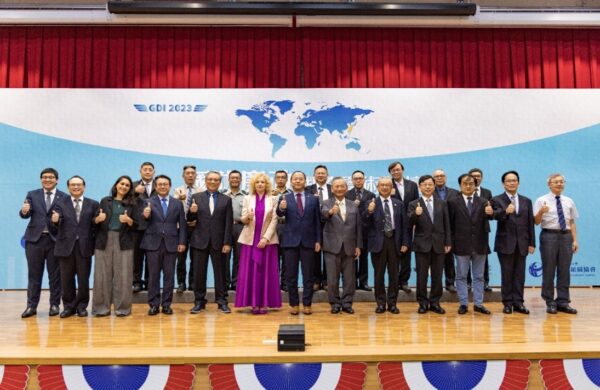
Above: Leading the TI-DS delegation is Ara Marcen Naval, Head of Advocacy (left centre), along with Najla Dowson-Zeidan, Advocacy & Engagement Manager (3rd from the left), Yi Kang Choo, Programme Officer (1st from the left), and Prof. Byung-Ook Choi, Transparency International South Korea (4th from the left).
Corruption represents a critical national security threat in this geo-politically sensitive region
The audience included directors from the Ministry of National Defence Procurement Office, Department of Resource Planning, Division of Defence Strategy and Resources, as well as the Ministry of Justice and the Agency Against Corruption. Companies within the defence industry were invited on the second day of the Forum.
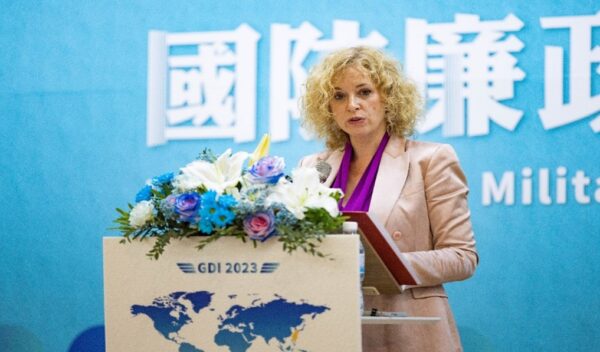
Above: Ara Marcen Naval, Head of Advocacy of TI-DS delivering keynote speech to attendees of the forum
Our delegation was hosted by Po Horng-Huei, Vice Minister of Defence (Policy) of Taiwan. We were joined by the Integrity Defence Committee in Transparency International Korea and members of Transparency International Taiwan.
Regional trends and corruption risks
As shown in our GDI index, while Taiwan generally scores highly on institutional resilience to corruption in defence, key defence sector corruption risks in Taiwan and across the Asia Pacific region reside within military operations. Corruption in operations undermines the power of deterrence.
When defence institutions lack integrity, deterrence strategies lose credibility. When neighbouring countries perceive a nation’s military as corrupt or compromised, they might view deterrence signals as less credible, potentially emboldening them to take more aggressive actions. Given Taiwan’s security ties to the stability of the region, any perception of corruption within Taiwan’s defence sector could potentially be exploited by adversaries seeking to undermine the credibility of its defence and weaken Taiwan’s position in the region. Moreover, such perception of corruption could incentivise aggressive behaviour by others, potentially leading to territorial expansion or military provocations, with the potential to destabilise the entire region.
Defence offsets: the mutual responsibility of defence companies and governments to operate with integrity
Countries across the world are developing and implementing new policies and strategies to strengthen their national defence manufacturing capabilities in response to elevated geo-political conflict, resource competition, and changing alliances.
Rather than focusing on boosting their defence manufacturing through direct grants and contracts with local defence companies, many countries are pursuing defence offsets – a form of industrial cooperation which involves foreign defence company investments in local defence or other economic sectors in exchange for securing arms deals with buying governments. The total value of defence offsets in Asia is expected to reach US$88 billion by 2025.
Countries in Asia and Oceania, both with developed and underdeveloped defence industries, are adopting defence offsets for various purposes. For example, Taiwan seeks to introduce high-tech industries, encouraging foreign investment, promoting exports, and improving industrial structure. Moreover, the facilitating role of industrial cooperation to the remarkable success in the semiconductor industry is widely acknowledged among policy makers in Taiwan.
However, this trend is not without its corruption risks.
Former government officials from across the region have highlighted “how offsets are susceptible to corruption within a sector where bribes can represent nearly twice the contract value of procurements in any other sector.” In India, the government has been investigating at least three corruption cases.
Some defence industry representatives have even cancelled contracts due to corruption concerns in offset related transactions. This form of corruption has hurt countries’ abilities to perform critical military missions, slowed growth in local defence industries, and eroded trust in government integrity.
Against this backdrop, the Transparency International Defence and Security delegation urged companies to publicly acknowledge the corruption risks associated with offset contracting and ensure that all offset partners and projects are subject to enhanced due diligence procedures. Defence companies should be transparent about any involvement in offset projects worldwide. Moreover, government officials and departments dealing with offset projects should enhance their oversight of key risk areas, including the use of wide-ranging multipliers to assess the value of proposed or completed offset projects, and the ability for defence companies to provide cash payments or working capital to any type of local company.
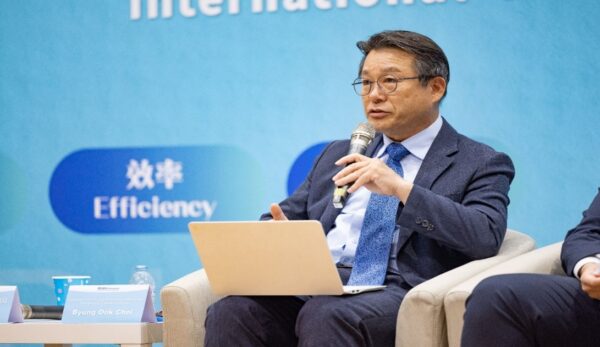
Above: Prof. Byung-Ook Choi, a member of the Integrity Defence Committee in Transparency International Korea speaking on stage, sharing his concerns and recommendations on offset policies to reduce corruption risks.
Another key area of risk within the region is corruption in the arms trade and defence procurement.
Global military expenditure in 2022 was $2.2 trillion – 3.7 per cent more than the previous year. China’s military spending rose last year for the 28th consecutive year, to reach $292 billion. Military spending in Taiwan is also rising, driven by concerns about regional security.
These increases in spending on defence, alongside the scale of corruption risk in the defence sectors of arms exporting and importing countries, brings increased risk of distorted defence spending priorities and military acquisitions, imbalances in the distribution of military capabilities, corruption-enabled arms diversion, and diminished military capability. Corruption in defence procurement can undermine the quality and reliability of military equipment and infrastructure, jeopardising the safety and operational effectiveness of armed forces during potentially critical situations.
To manage these risks, increases in defence spending must be accompanied by corresponding improvements in transparency and defence governance.
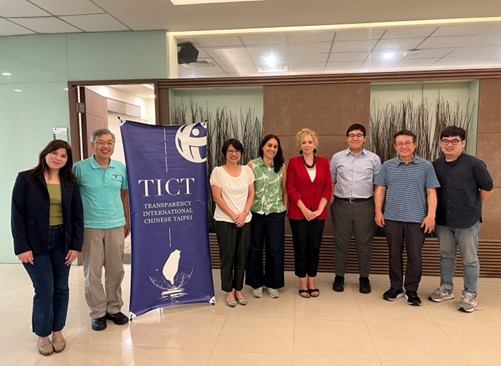
Above: Hybrid Regional Meeting between TI-DS with TI Chapter Representatives from Taiwan, South Korea, Malaysia, and Indonesia.
Looking ahead
Our visit to Taiwan exposed us to the dedicated efforts of the Taiwanese government to uphold transparency and integrity standards in their defence and security sectors. However, as is often the case in countries with high military expenditures and national security pressures, it remains possible for the full extent of the risk of corruption, or the perception thereof, to be overlooked. This risk has the potential to significantly impact a nation’s defence readiness and deterrence, Taiwan included.
Therefore, the need for continuous improvement is paramount. Addressing corruption risks within the defence sector is not an ethical obligation; it is a strategic imperative for Taiwan’s security, reputation, and stability. By actively working to eliminate corruption risks, Taiwan can continue to bolster its defence capabilities and contribute to regional stability, whilst at the same time setting an example for other countries in the region and beyond.
Proactive regional cooperation to promote defence integrity
In the margins of the Integrity Forum, we took the opportunity to convene and strengthen our alliances for more robust regional and global advocacy with Transparency International Chapter representatives in the region including South Korea, Malaysia, Indonesia, and Taiwan.
By aligning regional priorities and interests with our chapter colleagues, we eagerly anticipate more countries stepping up as champions against corruption within their national defence sectors, emulating Taiwan’s example and igniting a contagious movement of heightened integrity and security throughout the region. We’ll continue to emphasise that civil society organisations like Transparency International Defence and Security are allies in this ongoing, challenging, and profoundly important struggle to instil integrity in defence and security and create a safer world for all.
Yi Kang Choo is Programme Officer at Transparency International Defence and Security.
Responding to the reported coup in Gabon, Josie Stewart, Director of Transparency International Defence and Security, said:
This is the eighth coup in Central and West Africa in the last three years.
Corruption in the security sector has long fuelled insecurity across the region.
It has been inadequately addressed through security sector reform.
The consequences for the social contract and governance are severe.
press@transparency.org.uk
+ 44 (0)20 3096 7695
Out of hours – Weekends; Weekdays (UK 17.30-21.30): +44 (0)79 6456 0340
Responding to fresh data from the Stockholm International Peace Research Institute (SIPRI) demonstrating record global military spending, Transparency International Defence and Security Director, Josie Stewart, said:
New SIPRI data has revealed that the total global military expenditure increased by 3.7 per cent in real terms in 2022, reaching a new high of $2240 billion.
This increase in spending – coupled with our Government Defence Integrity index’s finding that nearly two-thirds of countries face a high to critical risk of corruption in their defence and security sectors – should be cause for concern for governments around the world.
To ensure that military expenditure is contributing to security rather than corruption and abuse, governments should strengthen transparency, accountability, and oversight in the defence sector, providing for adequate scrutiny from lawmakers, auditors, and civil society.
Transparency is the best way for states to ensure that military spending is used effectively to enhance security.
press@transparency.org.uk
+ 44 (0)20 3096 7695
Out of hours – Weekends; Weekdays (UK 17.30-21.30): +44 (0)79 6456 0340
Negotiations have been taking place in Geneva this month around the control and accountability of private military and security companies (PMSCs). Transparency International Defence and Security’s Ara Marcen Naval contributed to the discussions in Switzerland. Here she delivers a call to action to other civil society organisations.
As an NGO committed to promoting transparency and accountability in the defence and security sector, Transparency International Defence and Security (TI-DS) is deeply concerned about the corruption risks associated with the activities of PMSCs. These groups, while playing a role in enhancing security in some cases, often operate in secrecy, outside standard transparency and accountability structures. This permissive environment creates opportunities for corruption and conflict to thrive, deprives governments and citizens of financial resources, and undermines security and human rights.
I write having participated last week in the discussions of the Open-Ended Intergovernmental Working Group on PMSCs. This fourth session was convened to discuss a new draft of an international instrument to regulate the activities of PMSCs. This is a critical platform for addressing these concerns and others related to companies’ human rights obligations. There are various questions: how to ensure their activities comply with international humanitarian law? Should these companies be allowed to participate directly in hostilities?
The PMSC industry is a rapidly evolving and intrinsically international one, with a well-documented link to global conflict. The lack of regulatory oversight has led to heightened global risks of fraud, corruption, and violence, with little in the way of accountability mechanisms at both the national and international levels, so progress at a global level is key.
Current initiatives to try and regulate the market, such as the Montreux Document and the International Code of Conduct for Private Security Service Providers, are a step in the right direction. However, these initiatives have limited support among states around the world. They do not cover some key military and intelligence services and exclude some important anticorruption measures. TI-DS thinks these initiatives don’t go far enough to address the risks posed. We are hopeful that the efforts of the working group will provide a much-needed stronger set of enforceable standards.
TI-DS welcomes the progress made in the revised draft discussed last week, including references to the UN Convention Against Corruption and the UN Convention against Transnational Organised Crime. These references are essential steps towards policy and legal coherence, aligning efforts to regulate PMSCs with international legal obligations related to corruption and transnational organised crime.
While in Geneva I continued to propose ways that the text of the draft instrument can better incorporate anticorruption standards, including transparency of contracts and beneficial ownership, and through the recognition of corruption-related crimes as well as human rights abuses.
But we are deeply concerned about the overall lack of engagement. The room was almost empty, with many states not attending the discussions and a general lack of civil society actors actively following this critical process – prospective changes that could significantly impact conflict dynamics, international security, human rights and respect for international humanitarian law.
This is the Geneva Paradox. Other similar processes, like those related to business and human rights or others trying to get a grasp of new types of weapons systems, are filling the rooms of the United Nations, with both states and civil society in attendance. We feel that this process – which is attempting to regulate the activities of PMSCs to stop the trend of these corporate actors becoming rogue actors in wars and conflicts around the world – deserves equal attention.
In September, the Human Rights Council will set the agenda for this issue going forward. We hope that more states and civil society organisations join efforts in the coming period to give this issue the critical attention and scrutiny it deserves.
A working group of the United Nations assembled in Geneva, Switzerland on April 17, 2023 to evaluate and negotiate regulation of private military and security security companies (PMSCs).
Transparency International Defence and Security Head of Advocacy Ara Marcen Naval joined and delivered the following statement:
Mr. Chairperson rapporteur, distinguished delegates,
I stand before you today at this crucial discussion to bring to your attention, and consideration, the corruption risks linked to the activities of Private Military and Security Companies (PMSCs) with a sense of urgency and resolve. PMSCs can play an important role in government efforts to enhance security, but they often operate in secret and outside standard transparency and accountability structures. This dynamic provides a permissive environment for corruption and conflict to thrive and deprives governments and its citizens of financial resources and security.
The Defence and Security Programme of Transparency International welcomes the progress made in the revised draft and the changes made to include references to the Convention Against Corruption and Convention against transnational crime. These references are important steps towards policy and legal coherence and to ensure that the efforts to regulate the activities of PMSCs align with the international legal obligations in relation to corruption and transnational organised crime.
Corruption and the unchecked actions of PMSCs have far-reaching consequences, eroding the rule of law, undermining human rights and security, and threatening the legitimacy of governments. It corrodes public trust, undermines democratic institutions, and creates a culture of impunity that breeds more corruption. It can also weaken the fabric of societies, divert resources meant for development, and perpetuate inequality and injustice.
Transparency International has identified dozens of cases in which PMSCs are suspected of involvement in corruption and fraud. Some of the most concerning cases involve PMSCs colluding with government officials to inflate threat perceptions to win or sustain contracts. In one case, this action led to excessive use of force against protesters resulting in unnecessary injuries to civilians and security forces.
Transparency International has also raised concerns about some of the practices of PMSCs failing to disclose conflict of interests that could undermine government decisions, or even threaten national security.
In some cases multinational PMSCs have fuelled corruption by requiring local partners to pay kickbacks for participating in government funded contracts.
In these cases, the opaque arrangements prevalent in the sector make it extremely difficult to ascertain chains of command, responsibilities and levels of coordination among the different security actors, and undermine monitoring efforts and accountability. Furthermore, it is usually difficult to find public confirmation of the nature of the contract and the identity of subcontractors in the event that they are hired.
We hope that during the discussions on the potential instrument, the distinguished delegates will confront the implications corruption has and the abuses of PMSCs head-on and work together to prevent, detect, and punish corruption in all its forms. Transparency and reporting are the greatest steps that states can take to allow for effective monitoring and oversight of private military and security companies and other actors providing security services in order to effectively prevent, address and remedy any abuses committed.
Distinguished delegates, the stakes are high. The impact of corruption and the actions of PMSCs are felt by communities around the world, often with dire consequences for the most vulnerable among us. The fight against corruption and the responsible use of PMSCs requires our unwavering commitment and concerted and holistic action. Thank you.
press@transparency.org.uk
+ 44 (0)20 3096 7695
Out of hours – Weekends; Weekdays (UK 17.30-21.30): +44 (0)79 6456 034
Responding to the recently published US Strategy to Prevent Conflict and Promote Stability, Josie Stewart, Director of Transparency International Defence and Security, said:
The new strategy suggests that American policymakers are increasingly recognising the importance of anti-corruption approaches in confronting conflicts around the world.
With the long history of corruption fuelling conflicts, US and global policymakers must treat corruption as an urgent and permeating concern.
The path to peace and stability can only be built on concrete foundations. These should begin with anti-corruption efforts in defence – the sector most fundamental to safeguarding security.
press@transparency.org.uk
+ 44 (0)20 3096 7695
Out of hours – Weekends; Weekdays (UK 17.30-21.30): +44 (0)79 6456 0340
Responding to United Nations Security Council statements on security sector reform, Josie Stewart, Director of Transparency International Defence and Security, said:
There’s a lot to like about statements on security sector reform made by members of the UN Security Council last week.
Security sector reform is at least as much political as it is a technical process – governance and integrity are key.
And security sector reform is successful when it is inclusive – the participation of local communities is essential. Civil society has a key role to play in addressing corruption in defence and security.
press@transparency.org.uk
+ 44 (0)20 3096 7695
Out of hours – Weekends; Weekdays (UK 17.30-21.30): +44 (0)79 6456 0340
Responding to the latest annual data on global arms transfers, published by the Stockholm International Peace Research Institute (SIPRI) this month, Sara Bandali, Transparency International Defence and Security Director of International Engagement, said:
While international arms sales have decreased over the last decade, the bloody legacies of corruption in arms transfers linger.
Across Africa’s Sahel region, national weapon stockpiles have been depleted, with the corrupt diversion of arms bolstering groups such as Islamic State and Boko Haram. Killing of civilians and sexual and gender-based violence perpetuates, with the people of countries such as Nigeria and Mali left no safer by the arms that have entered their nations.
These risks are not constrained to the Sahel. Our latest Government Defence Integrity index shows almost half (49 per cent) of global arms imports are going to countries facing a high to critical risk of defence corruption.
Governments should strengthen transparency and accountability in arms transfer decision making to meet the reporting obligations of the Arms Trade Treaty. The scrutiny of lawmakers, auditors and civil society can deliver arms deals that truly enhance security.
press@transparency.org.uk
+ 44 (0)20 3096 7695
Out of hours – Weekends; Weekdays (UK 17.30-21.30): +44 (0)79 6456 0340
Responding to the new US Conventional Arms Transfer Policy, Josie Stewart, Director of Transparency International Defence and Security, said:
America’s new arms transfer policy represents the first full acknowledgement of the role corruption plays in undermining US efforts to enhance partners’ military performance.
This is a significant step forward. The US has committed to assess both the accountability mechanisms of partner security sector institutions and the risk of US arms transfers fuelling corruption. The effectiveness of these new provisions will hinge on the steps the US takes to obtain and use information on corruption risks associated with arms transfers.
Transparency International’s Government Defence Integrity index should provide a starting point. We look forward to advising the US Government on implementation, supporting a safer America, and a safer world.
press@transparency.org.uk
+ 44 (0)20 3096 7695
Out of hours – Weekends; Weekdays (UK 17.30-21.30): +44 (0)79 6456 0340
A forum tracking progress towards the 2030 sustainable development agenda has been taking place in Niger this week. With matters of security preoccupying policymakers and the public across the region, the moment has come for commitments made by United Nations members to be translated into action.
The aim of the ninth Africa Regional Forum on Sustainable Development is to take stock of how far countries have progressed towards the implementation of five of the Sustainable Development Goals (SDGs), an ambitious set of development targets to be met by 2030.
However Goal 16, “Peace, Justice and Strong Institutions”, is not part of the review, although the security challenges facing countries including Niger, Nigeria and Mali should serve to remind delegates of the urgent need to address corruption-related risks to defence and security.
Goal 16 includes commitments to fight corruption, increase transparency, tackle illicit financial flows and improve access to information to achieve peaceful societies. Without meaningful action to reduce corruption, little progress will be achieved in the five SDGs selected for discussion: Goals 6 (clean water and sanitation); 7 (affordable and clean energy); 9 (industry, innovation, and infrastructure); 11 (sustainable cities and communities); and 17 (partnerships for the Goals).
Corruption, organised crime, the use of illicit financial flows to fund terrorism and violent extremism and forced displacement of people threaten to reverse much development progress made in recent decades. Mali is a case in point. Impunity to corruption, terrorism, drug trafficking and other forms of transnational organised crime undermine stability and development.
In Nigeria, where high-profile elections have been fought in recent days, memories of the deadly End SARS protests continue to linger.
Elsewhere conflicts and instability add to natural disasters, causing untold human suffering. Our ability to prevent and resolve conflicts and build resilient, peaceful and inclusive societies has often been hampered by endemic and widespread corruption.
We must take action and do so by embracing a “whole-of-society approach,” fostering dialogue, cooperation, and partnerships between state and non-state actors to promote transparency, accountability, and effective oversight, in line with Goal 16 of the SDGs.
Failing to take action on SDG 16 following the forum would be a missed opportunity, especially when coordinated efforts and commitments are needed from states in and out of Africa, to address the complex problem of corruption and its threat to human lives.
Jacob Tetteh Ahuno, Projects Officer, Ghana Integrity Initiative; Mohamed Bennour, Transparency International Defence and Security Project Manager; Ara Marcen-Naval, Transparency International Defence and Security Head of Advocacy; Bertha Ogbimi, Programme Officer, CISLAC; Abdoulaye Sall, President of CRI 2002
Image: Lagos, Nigeria, during the End SARS protests of October, 2020.